Illuminating science videos: artistry or accuracy?

In science and tech communication, there’s a constant balancing act between staying true to the facts and making sure your audience actually understands the content. When you’re creating a video for a science-based company, you’re not just presenting data—you’re a storyteller. And that means knowing when to simplify, when to dramatize and when to bend the truth just a little to help people see the bigger picture.
The lightning example ⚡️
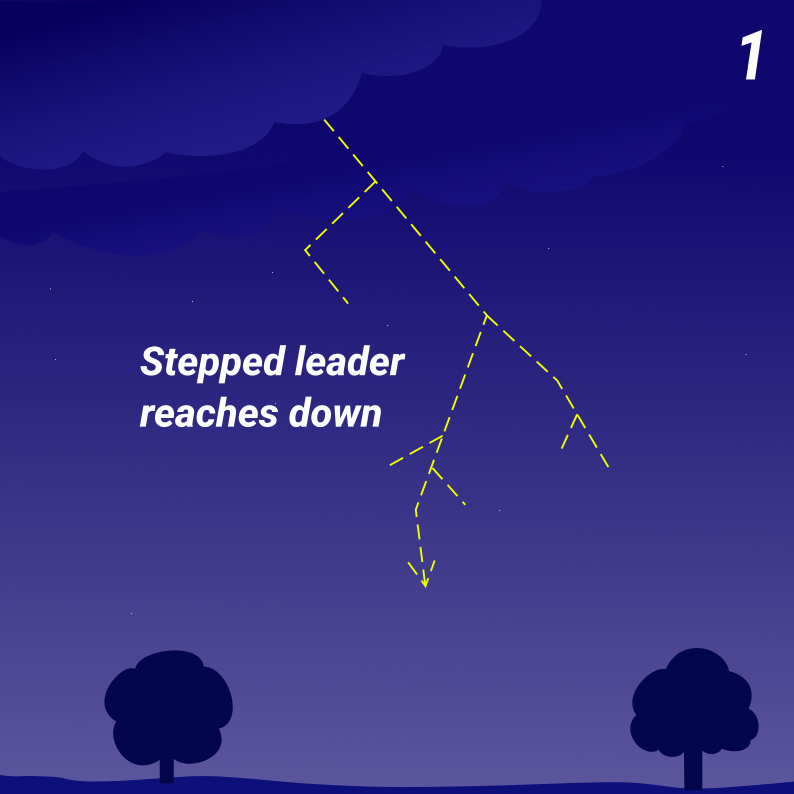
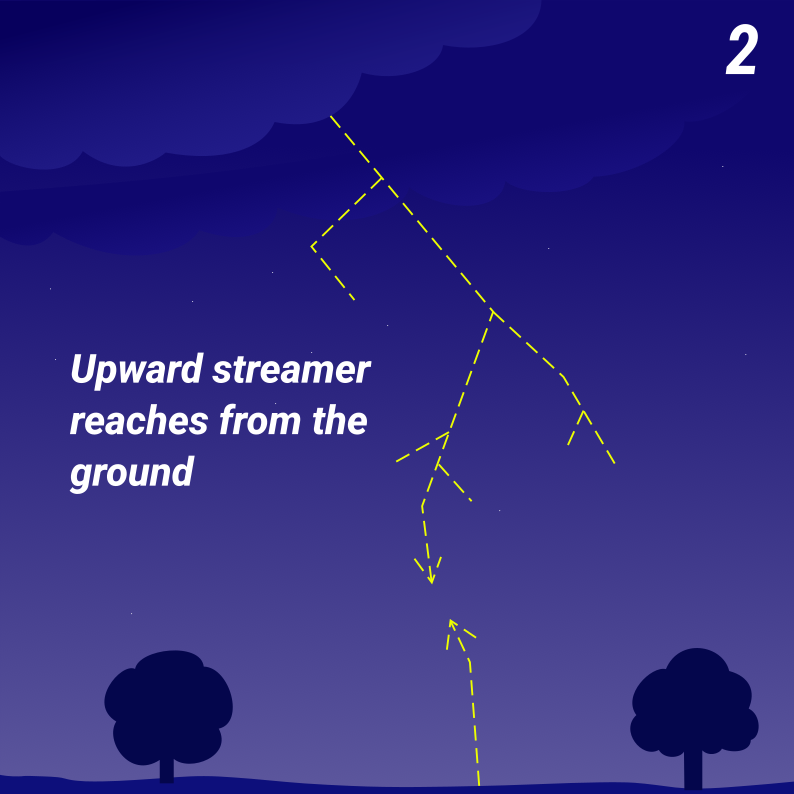
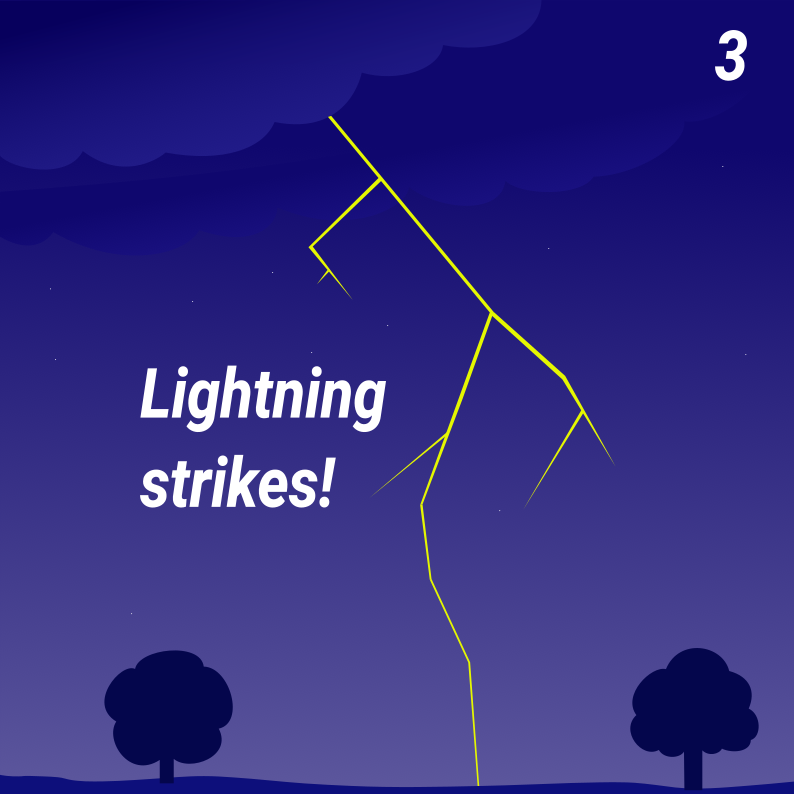
Let’s start with something familiar—lightning. Most people believe lightning simply strikes down from the sky to the ground, that’s what we see after all. But the real process is much more complex: “stepped leaders” fly down from the sky then a “charged streamer” reaches up from the ground to meet it. When they meet it forms a bridge for negative and positive charges to flow across, producing such intense heat that it explodes the air around it, resulting in the bright flash which we call lightning.
So if you’re creating an animation to show how lightning works, how do you represent it? Do you start with the leaders and streamers that are invisible to the naked eye or the dramatic bolt that everyone expects?
If you begin with tendrils of electricity creeping upward, you risk losing your audience before you’ve even made your point because they dismiss it as inconsistent with what they ‘know\'. But if you begin with the familiar bolt striking downward, you give viewers a visual anchor. Once they’re oriented, you can address the misconception and reveal what’s really happening.
This is a valid storytelling device because it leads people from what they think they know to what’s actually true.
Myths as on-ramps to understanding 🧭
The human brain loves stories, but it struggles with dissonance. When information completely contradicts what we already believe, our instinct is often to reject it outright. That’s why effective science communication may start with a myth. Not to reinforce it, but to use it as an on-ramp—a familiar entry point that makes the truth easier to grasp once we become more informed.
By acknowledging the misconception first, we meet the viewer at their level of understanding, then when reality is revealed it feels like an aha moment instead of a correction.
This approach can make science more accessible
Artistic License vs. Accuracy 🎨
Of course, there’s a line between artistic license and misinformation. The goal isn’t to deceive, it’s to clarify. The difference lies in intent and execution.
When artistic license is used responsibly, it simplifies surface details while preserving the underlying truth. A molecule could be exaggerated for visibility, a reaction sped up for pacing, or size adjusted so two interacting objects can share a frame. These are all choices that make the concept clearer, not less accurate in essence.
Think of a map for example. A subway map doesn’t show exact geography—it distorts distances and directions but that makes it more useful because it communicates what actually matters: how to get from one station to another.
The same principle applies in visual science storytelling. If absolute precision obscures understanding, then the message is lost. And when the goal is to inspire curiosity, engage stakeholders, or explain complex technology to a broader audience, clarity often takes priority.
Leading with what feels true
When making science-based videos, keep in mind you can show what feels true first—then reveal what is true. It’s a method that respects both science, storytelling and how we learn.
For example, in a gene editing animation, you might first depict DNA as a familiar double helix being “cut” with scissors. It’s not literally accurate (CRISPR doesn’t use tiny tools!) but it’s an instantly recognizable metaphor. Once the viewer is on board, we can introduce them to the more precise mechanism of action.
This approach is about meeting people where they are, then guiding them to a deeper understanding.
Bending the truth to reveal it 💡
Ultimately, science videos succeed when instead of overwhelming with detail, they illuminate the truth. If that means starting with a myth to lead the audience toward reality, so be it.
When used ethically, artistic license celebrates science instead of betraying it, turning complex information into meaningful stories, invisible forces into visible ideas, and curiosity into comprehension.
Because sometimes, to show what’s really true, you have to bend the truth—just a little.
Ready to amplify your message?
To distil your complex technology into a clear, compelling video that resonates with your prospects contact us.